
Two Pathways, One Philosophy: How Remedy Supports Practitioners at Every Stage
There isn’t one “right” way to enter this industry.
Some people are just beginning and need education, structure, and a clear path to licensure.
Others are already licensed and need support stepping fully into real-world practice.
At Remedy, we see both, and we built our pathways to meet practitioners where they actually are, not where the industry assumes they should be.
That’s why we offer two distinct pathways, grounded in one shared philosophy.
One Philosophy, First
Before getting into the pathways themselves, it’s important to understand what they’re built on.
At Remedy, we believe:
Learning works best when it’s integrated into real life
Mentorship matters as much as technique
Sustainability matters more than speed
Confidence is built through support, not pressure
Whether someone is pre-licensure or already licensed, the goal is the same:
to help practitioners build long-term, grounded careers without burning out early.
The Licensure Apprenticeship Pathway
(For Those Not Yet Licensed)
The Licensure Apprenticeship Pathway is designed for individuals who are not yet licensed and are seeking a studio-integrated route toward massage therapy licensure.
This pathway includes:
Required theory, anatomy, physiology, pathology, and ethics
Structured education aligned with state requirements
Supervised hands-on clinical hours that count toward licensure
Mentorship inside a real, functioning studio environment
Rather than separating education from practice, this pathway allows apprentices to learn while they’re immersed in the environment they’ll eventually work in.
As apprentices progress, they transition into paid, supervised clinical work, allowing them to earn while completing required hours. This helps reduce the financial gap that often exists between education and employment.
At this time, the licensure apprenticeship pathway is offered for massage therapy only.
The Professional Integration Pathway
(For Licensed Practitioners)
The Professional Integration Pathway is designed for practitioners who are already licensed and want support bridging the gap between licensure and confident, consistent practice.
This pathway is available to both:
Licensed massage therapists
Licensed estheticians
Integration focuses on:
Refining technique through real client work
Building confidence, pacing, and communication
Learning studio flow, standards, and expectations
Developing sustainability and longevity in the field
This is not re-schooling or retraining.
It’s about integration, turning education and licensure into embodied, confident practice inside a supportive environment.
Same Values, Different Starting Points
These two pathways aren’t separate ideas, they’re part of the same ecosystem.
The difference isn’t philosophy or quality.
It’s simply where someone is starting from.
Not licensed yet → Licensure Apprenticeship Pathway
Already licensed → Professional Integration Pathway
Both pathways emphasize:
Mentorship over micromanagement
Structure without rigidity
Growth without burnout
Real-world experience with real support
Why Integration Matters at Every Stage
Many practitioners struggle not because they lack ability, but because they’re expected to figure everything out alone.
Integration changes that.
When learning and practice happen together:
Anatomy makes sense on real bodies
Pathology is understood in context
Communication becomes natural
Boundaries are learned early
Confidence builds steadily
This applies whether you’re training toward licensure or learning how to truly step into your role as a professional.
A Continuum, Not a Fork in the Road
We don’t see apprenticeship and integration as separate tracks — we see them as a continuum of support.
Education leads to practice.
Practice leads to confidence.
Confidence leads to longevity.
Our pathways reflect the real progression of a career, not just the moment someone passes boards.
Not About Choosing the “Best” Path — But the Right One
Some people thrive in traditional classroom settings.
Some thrive through hands-on, integrated learning.
Neither is wrong.
What matters is choosing a path that:
Matches how you learn
Supports your nervous system
Aligns with your life and responsibilities
Helps you stay in the industry long-term
At Remedy, our role isn’t to push one path, it’s to offer thoughtful, ethical options grounded in real support.
Supporting the Whole Practitioner
Whether someone enters through apprenticeship or integration, the intention is the same:
to support practitioners as whole people, not just service providers.
Because when practitioners are supported:
Clients feel it
Work becomes sustainable
Careers last
Learn more about each pathway
Apprenticeships vs Traditional School: The Remedy Way

At Remedy, we believe in being honest about what each path actually offers, and why we intentionally built our apprenticeship model the way we did. If you’re considering a career in massage therapy or esthetics, you’ve probably been told there’s only one “right” way to get licensed: traditional school
But that’s not the full picture.
There are two legitimate paths to licensure, and understanding the difference can help you choose the one that actually fits how you learn, work, and grow.
This isn’t about saying one is better than the other.
It’s about clarity.
Traditional School: Classroom-Based Education
Massage and esthetics schools play an important role in this industry.
They are designed to:
Teach foundational theory
Cover anatomy, physiology, pathology, and ethics
Prepare students to pass state licensing exams
Introduce techniques in a structured academic setting
For people who thrive in classrooms, lectures, and clearly defined coursework, traditional school can be a great fit.
In most cases, this model is tuition-based, students pay for education, complete required hours, graduate, and begin earning after licensure.
That structure works for many learners.
What it doesn’t always provide is real-world context.
Where the Gap Often Shows Up
Many graduates leave school technically prepared, yet still unsure.
Not because they didn’t learn enough, but because:
Learning was separated from real studio environments
Hands-on experience was limited or simulated
Professional expectations weren’t fully integrated
The transition into real client work felt abrupt
This gap between education and application is where a lot of new practitioners feel overwhelmed.
That’s where apprenticeship pathways come in.
What an Apprenticeship Actually Is (and Isn’t)
There’s a lot of confusion around apprenticeships, so it’s important to be clear.
A legitimate apprenticeship is not:
Skipping education
Cutting corners
Unpaid labor
“Learning as you go” with no structure
A state-recognized apprenticeship still includes:
Theory
Anatomy & physiology
Pathology
Ethics
Supervised hands-on hours required for licensure
The difference isn’t what is taught.
It’s how and where the learning happens.
The Remedy Apprenticeship Model: Education Integrated Into Practice
At Remedy, our licensure apprenticeship pathway was built for people who learn best through integration.
Instead of separating:
education → graduation → work
We combine:
education + supervised practice + studio integration
from the beginning.
Apprentices receive:
The same foundational education required for licensure
Structured coursework in anatomy, physiology, pathology, and theory
Supervised hands-on practice with real clients
Ongoing mentorship inside a functioning studio
Learning doesn’t happen in isolation, it happens in context.
Learning While Working and Earning
One of the biggest differences between traditional school and an apprenticeship pathway is when earning begins.
In traditional programs, education is typically tuition-only. Students focus on learning first and don’t begin earning until after graduation and licensure.
In the Remedy apprenticeship model, there is still a tuition component for the educational portion of training, but apprentices transition into paid, supervised clinical work as part of their pathway.
This means:
You’re earning while completing required hands-on hours
Real client work helps offset the cost of The Tuition paid in the Educational portion of training
There’s less of a financial gap between learning and working
Training feels more sustainable, especially for career-changers
possible continued employment
This isn’t about shortcuts or free labor.
It’s about acknowledging that real work has value, even while you’re still learning.
Why Learning in Context Matters
When education happens inside a real studio:
Anatomy makes sense because you feel it on real bodies
Pathology is understood as it presents, not just memorized
Communication skills develop naturally
Professional standards become habits, not rules
smaller cohort = more one on one, more intimate settings
Instead of asking “How will this work in real life?”
You’re already living it, with guidance.
This Path Isn’t Easier, Just Different
Apprenticeship is not the “easy route.”
It requires:
Consistency
Accountability
Time management
Emotional maturity
Willingness to receive feedback
You’re learning and showing up professionally at the same time.
For some people, a classroom-first environment feels safer.
For others, integrated learning builds confidence faster.
Both paths are valid.
Burnout Prevention Starts During Training
Another key difference between the two models is when sustainability is taught.
In an integrated apprenticeship, practitioners learn early:
How to pace their bodies
How to manage energy
How to hold boundaries
How to work sustainably inside a studio
Instead of burning out and fixing habits later, practitioners are supported before burnout begins.
Same License. Different Experience.
Both traditional schools and apprenticeships lead to the same outcome:
✔️ Licensure
✔️ Eligibility to practice
The difference is the experience of getting there.
Traditional school
Tuition-based education
Learn first, earn later
Transition into work after graduation
Remedy apprenticeship
Tuition + paid supervised practice
Learn and earn together
Integrate into real work gradually
Neither path is wrong.
One may simply fit your life better.
Choosing the Right Path Is Personal
Some people thrive in classrooms.
Some people thrive through hands-on learning.
The best choice is the one that:
Matches how you learn
Supports your nervous system
Prepares you for real work
Helps you stay in the industry long-term
At Remedy, our apprenticeship pathway exists because we saw too many talented people struggle, not from lack of ability, but from lack of integration.
A Thoughtful Alternative, Not a Replacement
Our goal isn’t to replace traditional schools or compete with them.
It’s to offer another legitimate, thoughtful path to licensure, one that blends education, mentorship, real-world practice, and paid experience inside a supportive studio environment.
Because how you’re trained shapes how long you stay.
Explore the Remedy Licensure Apprenticeship Pathway
A studio-integrated path to licensure combining education, mentorship, real-world experience, and paid clinical practice.
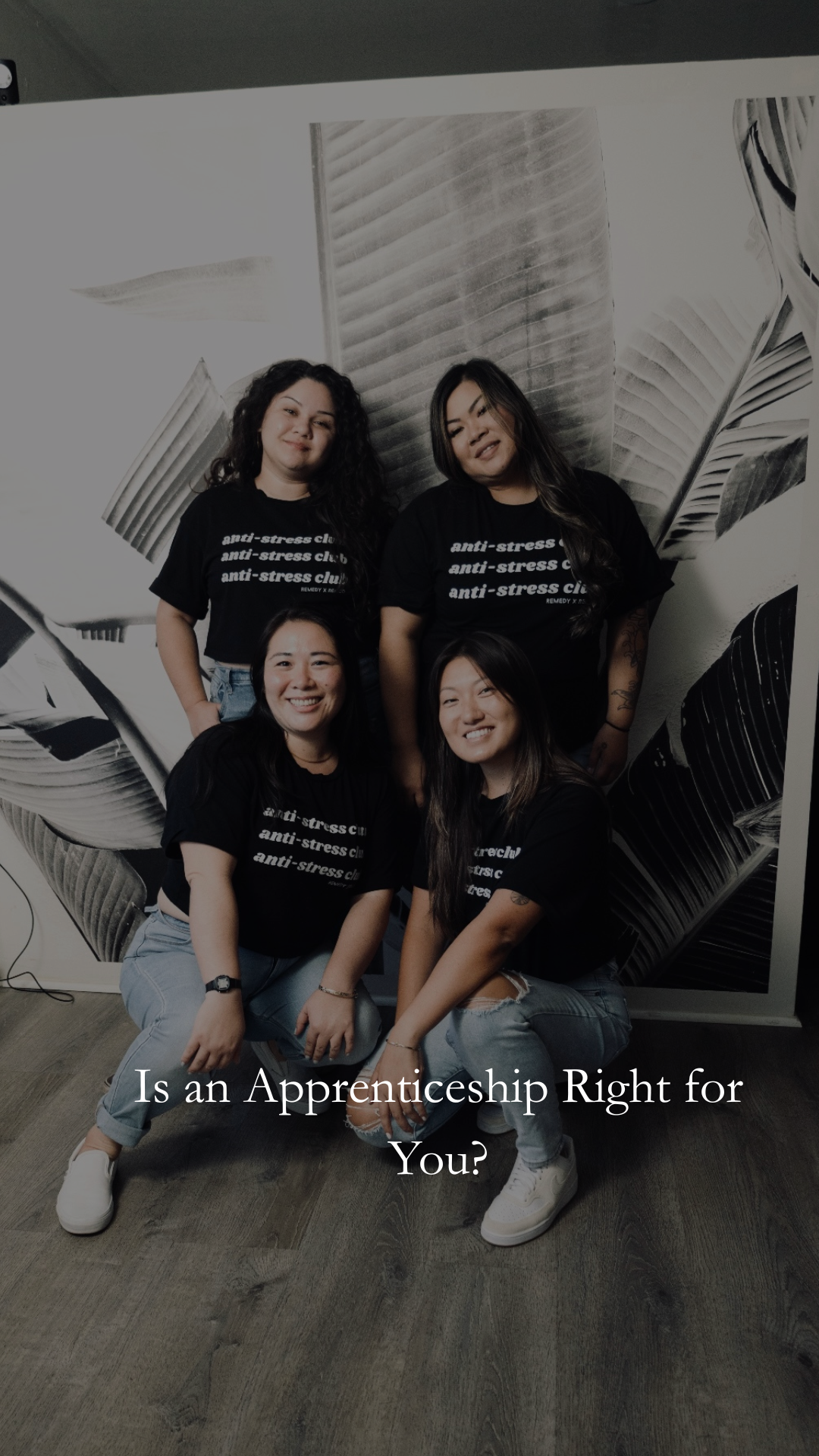
Is an Apprenticeship Right for You?
A Quick Self-Check for Future Practitioners
There’s no “better” path, just the one that fits you.
If you’re deciding between traditional school and an apprenticeship pathway, this quick self-check can help you get clearer without overthinking it.
No pressure. No selling. Just honesty.
Quick Check: Answer Yes or No
1. Do you learn best by doing, not just listening?
You understand things faster when you can practice, observe, and apply — not just read or memorize.
☐ Yes ☐ No
2. Do you want real-world experience while you’re still learning?
You’re curious about what studio life actually looks like and don’t want your first real client experience after training ends.
☐ Yes ☐ No
3. Are you comfortable learning in a professional environment early?
You’re open to showing up on time, communicating professionally, and learning studio standards as part of your education.
☐ Yes ☐ No
4. Do you want to earn while you learn?
You’re okay with tuition for education — but value the ability to transition into paid, supervised clinical work during training instead of waiting until graduation.
☐ Yes ☐ No
5. Are you open to feedback and mentorship?
You don’t expect perfection — and you’re willing to learn through guidance, correction, and support.
☐ Yes ☐ No
6. Do you prefer structure over total flexibility?
You do better with clear expectations, schedules, and benchmarks rather than figuring everything out on your own.
☐ Yes ☐ No
7. Are you thinking about longevity, not just licensure?
You care about pacing, boundaries, and staying in the industry long-term — not just getting licensed as fast as possible.
☐ Yes ☐ No
8. Are you looking for something long-term, not just a quick license?
You’re thinking beyond “getting through school” and care about building a career that’s sustainable, aligned, and something you can stay in.
☐ Yes ☐ No
Your Results
Mostly “Yes”
An apprenticeship pathway may be a strong fit for how you learn and grow.
You might benefit from:
Integrated education
Real-world practice early
Mentorship and structure
Learning and earning together
Mostly “No”
A traditional classroom-based school may feel more supportive for you, especially if you prefer learning first and applying later.
That’s not a failure or a limitation. It’s just a different learning style.
A Mix of Both
You’re not alone.
Many people benefit from one model more than the other depending on:
Life stage
Learning style
Financial needs
Comfort with responsibility
The best choice is the one that supports you where you are right now.
There’s No Wrong Answer
Both paths lead to licensure.
Both can create strong practitioners.
What matters most is choosing a training environment that:
Matches how you learn
Supports your nervous system
Helps you grow with confidence
Curious What an Integrated Apprenticeship Looks Like?
If you’re exploring a studio-integrated path to licensure that blends education, mentorship, real-world experience, and paid clinical practice, you can learn more here:
Explore the Remedy Licensure Apprenticeship Pathway
Explore the Remedy Licensure Apprenticeship Pathway
A studio-integrated path to licensure combining education, mentorship, real-world experience, and paid clinical practice.
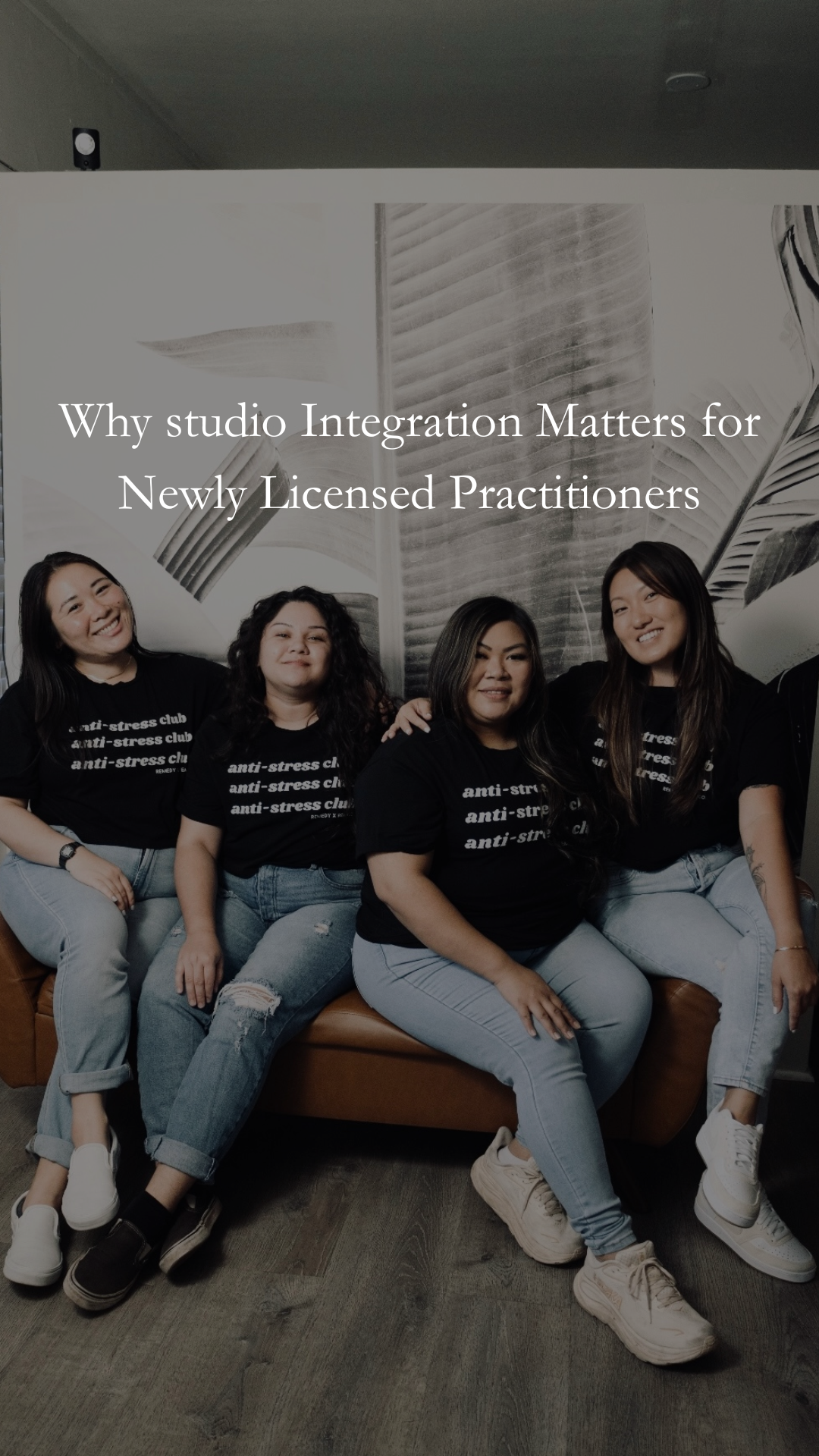
Why studio Integration Matters for Newly Licensed Practitioners
Getting licensed is a milestone.
But it’s not the finish line, it’s the handoff point.
For many massage therapists and estheticians, the hardest part of the career doesn’t come during School. It comes right after, when you’re expected to suddenly function like a fully formed professional with little guidance.
this is where studio integration matters.
Licensure doesn’t equal readiness
School teaches theory, technique, and safety.
What it doesn’t teach is how to:
work inside a Real Studio with real Expectations.
bridge the gap between theory and hands-on practice.
navigate client Communication, timing And flow
Understand patholgy in context, not just memorized conditions
adapt when bodies, skin, or Symptoms don’t resent “by the book”
Licensure means you’re allowed to practice, not that you’ve had enough practice yet.
The gap between school and real work is where people get lost
newly licensed practitioners often fall into one of two Situations:
thrown into a full schedule too fast
left uneerbooked with no direction
both lead to doubt, burnout, or leaving the industry altogether. studio Integration fills that gap.
What studio integration actually means
studio Integration isn’t just “having a job”
it’s being Intentionally brought into:
a team
a flow
a standard of care
a culture
it’s the difference Between working somewhere and being supported Somewhere.
Confidence is built through consistency not pressure
Confidence doesn’t come from being pushed harder.
it comes from:
repetition
feedback
observation
time
integrated Environments allow practitioners to build skill and Trust gradually, without fear of failure.
Clients benefit when practitioners are integrated
clients can feel when someone is unsupported.
integrated practitioners:
stay present
Communicate clearly
maintain Boundaries
Deliver consistent care
that’s not accidental, it’s Environmental.
Mentorship is what tuns skill into mastery
most licensed practitioners have ability:
what they’re missing is:
real-time feedback
context
perspective
reassurance
studio integration provides mentorship without shame or Hierarchy.
Studio standard protect both practitioner and client
clear standards reduce stress.
integrated studios provide:
defined service flow
clear timing expectations
Communication guidelines
boundary support
when Expectations are clear, Confidence follows.
Studio integration supports longevity
careers Aren’t build on intensity- they’re built on sustainability.
Integrated practitioners:
learn pacing early
avoid injury and burnout
build consistency
stay in The industry longer
this benefits everyone.
Without integration, many talented Practitioners disappear
the industry doesn’t lose people because they aren’t good enough.
it loses them because they’re unsupported during the most vulnerable stage of their career.
studio Integration isn’t Extra, it’s essential.
A place to land after licensure matters
at remedy, we believe licensed massage therapists and Estheticians deserve more than a sink-or-swim start.
studio Integration means:
real work
real support
real growth
because what happens after Licensure determines whether someone stays or burns out.
Explore the remedy Integration pathway
learn how supported Studio Integration helps licensed practitioners build confidence, consistency, and longevity.

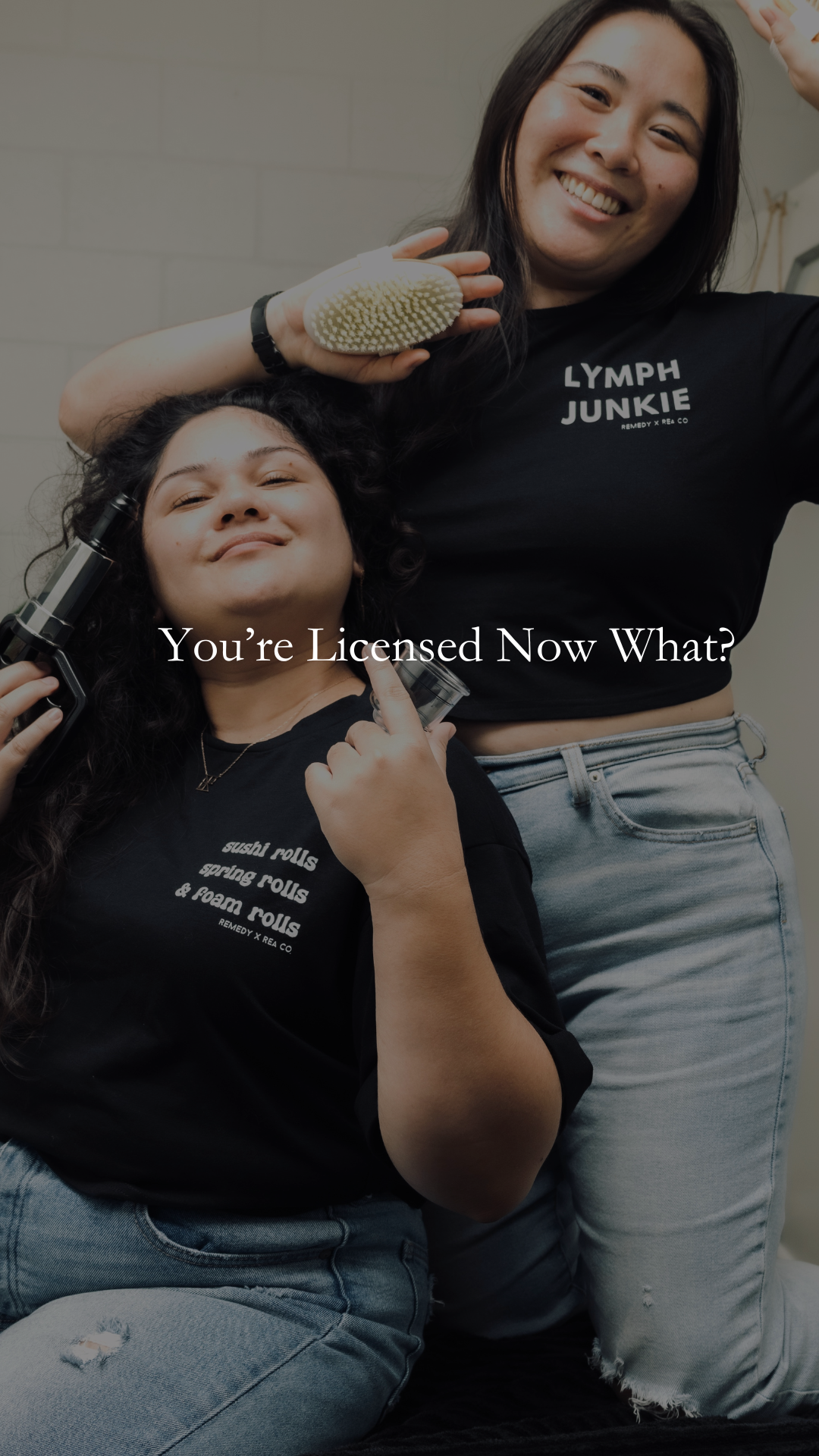
You’re licensed! Now what?

The Part of Massage & Esthetics no one talks about
Getting licensed Doesn't mean you’re ready, it means you’re at the starting line. Here’s why so many practitioners struggle after school, and What actually helps.
you did the thing.
You went to school. You studied. you passed the Boards. and you got licensed.
and then.. Reality hit.
if you’re a newly licensed massage therapist or Esthetician and you’re thinking… “Why does this feel harder than I expected?” you’re not alone. in fact, most people feel it. they Just don’t talk About it.
here’s the part no one really prepares you for.
School was hard - but the real world is harder.
Massage and esthetics school teaches you the foundations and how to pass The exams. The real world teaches you how to work One Ear bodies, real skin, and real people with expectations.
Clients don’t come in textbook-perfect. They come in tired, in pain, overstimulated, stressed, or frustrated because nothing has Worked for them yet.
The transition alone can feel overwhelming.
Being in the field with People who’ve been dong it longer can shake your confidence.
You step into your first job and suddenly you’re surrounded by practitioners who move faster, sound more confident, and seem to “just know.”
It’s easy to start comparing:
Your pressure
your flow
your results
your pace
And quietly wonder if you’re behind. You’re not. you’re just new.
CEU’s don’t automatically equal confidence
Continuing education matters.
learning never stops in the industry.
But here’s the truth: no Amount of classes replaces hands-on reps, real feedback, and being guided in real time.
You don’t gain confidence by collecting certifications. you gain it by doing the work - over and over with support.
No clients + no revenue (this is where most people give up)
This Is the breaking point for a lot of licensed practitioners.
You’re motivated. you’re capable. Bit if you’re not booked, you’re not earning, or getting the Experience You need.
No Clients means:
no consistency
No confidence boost
no momentum
And this is where many People quietly leave the industry, not because they weren’t good, but because they didn’t have a way to build.
Real Clients want real results
Clients aren’t grading your technique, or the amount of Strokes you did on one side = to the other side
they want to:
feel relief
see improvement
Trust your recommendations
feel safe in your care
results come from presence, communication, consistency, and Experience- not perfections.
Burnout happens earlier than people expect
No one really talks about this part.
New practitioners often:
overbook
go over time
say yes to everything
skip breaks
Ignore their own bodies
all before they’re even financially stable. burnout Doesn’t mean you’re weak it means you weren’t taught boundaries early enough.
School didn’t teach you how to Survive in this industry.
most programs don’t cover:
rebooking Conversations
client Communications
energy management
pacing your body
confidence in Pricing
professional Boundaries
Those are learned in the field, or not at all.
Environment matters more than talent
this one is important.
the wrong Environment can drain even the most gifted practitioner. the right environment can help someone grow into their potential.
talent doesn’t thrive in isolation. it Grows with mentorship, structure, And support.
You don’t need more talent, you need integration
if you’re feeling stuck after licensure, the problem usually isn’t your ability.
it’s the gap between:
school and real work
learning and doing
potential and execution
you don’t need another class. you need a place to integrate What you’ve learned into real practice.
The Solution: supported employment integration
at remedy, we see this gap all the time, which is why our Focus isn’t on selling programs or stacking certifications.
We believe in employment integration:
real clients
real reps
real mentorship
real feedback
real Growth
a place to land, learn, and build Confidence while actually working.
Because being licensed doesn’t mean you’re finished. it means you’re beginning
if you’re licensed and feeling User, overwhelmed, or Undercooked- you’re not failing.
you’re just in the part no one explained.
and you don’t have to figure it out alone.