
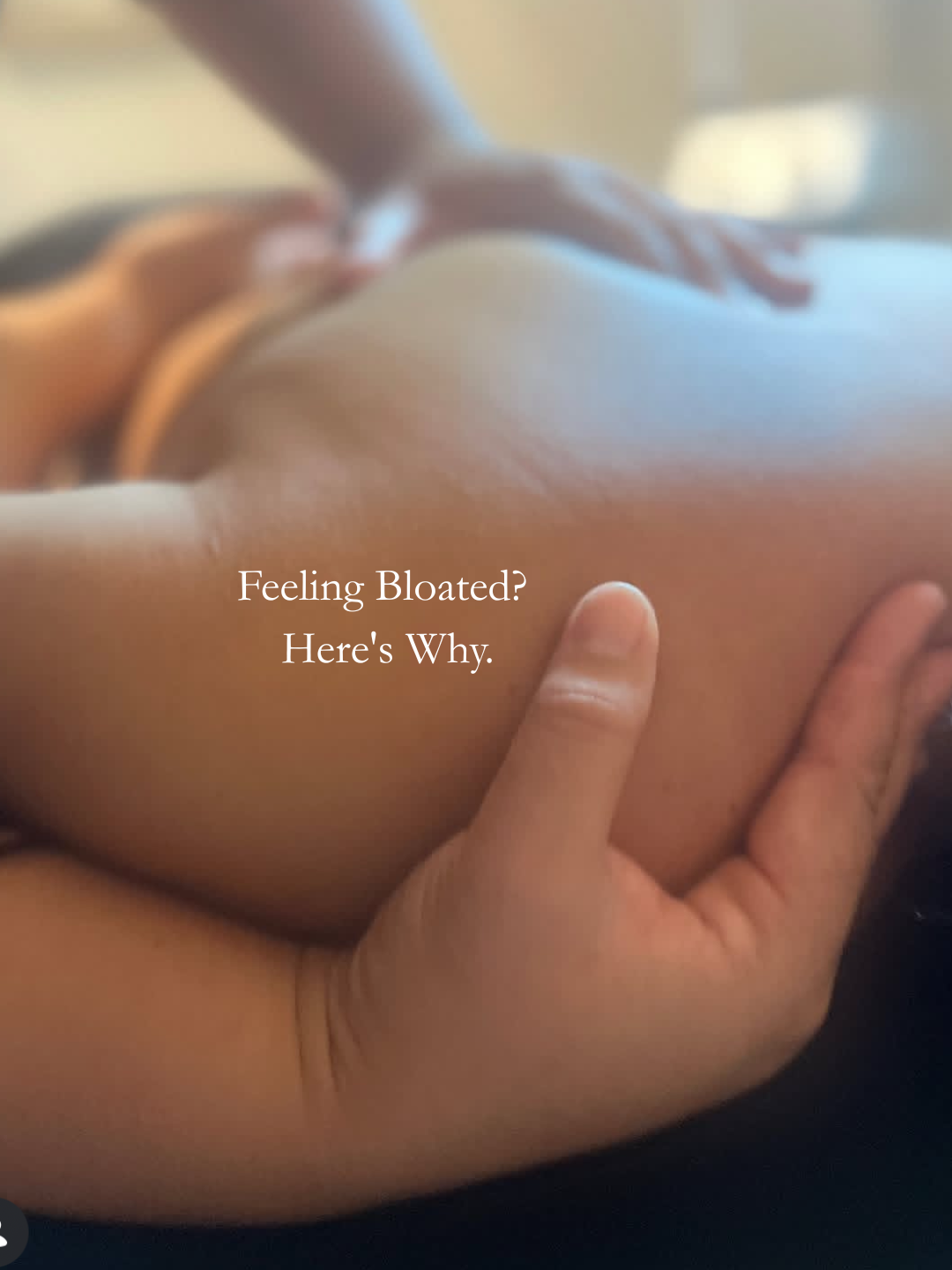
Why Am I Always Bloated? 7 Reasons Your Body Might Be Holding Onto Fluid
We often associate bloating with food, but that's only part of the picture. Fluid retention can be influenced by everything from hydration and hormones to stress, movement, and your lymphatic system. In this article, we'll explore seven common reasons your body may be holding onto fluid, and simple ways to support your body naturally.
Have you ever woken up feeling swollen, puffy, or like your clothes fit differently overnight? You're not alone. Many people assume they're gaining weight when, in reality, they're experiencing water retention.
Bloating isn't always caused by digestion. Sometimes it's your body's way of telling you that something else is out of balance.
Here are seven common reasons your body may be holding onto fluid.
1. You're Not Drinking Enough Water
It sounds backwards, but dehydration can actually cause your body to retain water.
When your body senses it isn't getting enough fluids, it holds onto every drop it can. Staying hydrated helps your kidneys remove excess fluid more efficiently and supports healthy circulation.
Tip: Aim to drink water consistently throughout the day instead of waiting until you feel thirsty.
2. Your Sodium and Electrolytes Are Out of Balance
Salt isn't the enemy, but too much sodium without enough potassium, magnesium, and water can leave you feeling puffy.
Highly processed foods often contain large amounts of sodium while providing very few minerals that help regulate fluid balance.
Focus on whole foods, fruits, vegetables, and staying hydrated to help your body maintain balance.
3. You're Sitting Too Much
Movement acts like a pump for your lymphatic system.
Unlike your heart, which pumps blood automatically, your lymphatic system relies on muscle contractions, breathing, and daily movement to circulate lymphatic fluid.
Long periods of sitting, whether you're at work, on a plane, or relaxing at home, can contribute to swelling in the legs, ankles, and abdomen.
Even a short walk can make a noticeable difference.
4. Your Hormones Are Fluctuating
Many women notice increased bloating before their menstrual cycle.
Hormonal changes can influence how much water your body retains, making you feel swollen in your face, abdomen, hands, or legs.
This type of bloating is extremely common and often improves as hormone levels shift.
5. Your Stress Levels Are High
Stress affects more than your mind, it impacts your entire body.
When stress becomes chronic, hormones like cortisol can influence fluid balance, inflammation, digestion, and sleep. All of these can contribute to that "puffy" feeling many people experience during stressful seasons.
Supporting your nervous system through quality sleep, movement, massage, mindfulness, and recovery can make a meaningful difference.
6. Your Lymphatic System Needs Support
The lymphatic system helps move excess fluid, waste products, and proteins away from your tissues.
When lymphatic circulation slows, fluid can begin collecting in different areas of the body, leading to feelings of heaviness or puffiness.
While your lymphatic system works around the clock, it depends on movement, deep breathing, hydration, and healthy circulation to function efficiently.
Many people find that treatments like Brazilian lymphatic drainage massage, combined with healthy lifestyle habits, help temporarily reduce fluid retention and leave them feeling lighter.
7. Your Lifestyle Has Changed
Travel, poor sleep, eating differently, increased alcohol intake, intense workouts, and even hot weather can all contribute to temporary water retention.
If you've recently been on vacation, attended several events, or changed your routine, your body may simply be adjusting.
The good news is that this type of bloating is often temporary and improves as your normal habits return.
When Should You Be Concerned?
Occasional bloating is common. However, it's important to speak with your healthcare provider if you experience:
Swelling that affects only one leg
Sudden or severe swelling
Shortness of breath
Chest pain
Persistent swelling that doesn't improve
Significant pain, redness, or warmth
These symptoms can indicate a medical condition that requires prompt evaluation.
Small Changes That May Help
If you're feeling bloated more often than you'd like, try:
Drinking enough water throughout the day
Eating more whole, minimally processed foods
Moving your body regularly
Prioritizing quality sleep
Managing stress
Taking walking breaks if you sit for long periods
Supporting healthy lymphatic circulation with regular movement and appropriate massage
Remember, bloating doesn't always mean you've gained weight. Often, it's your body's response to changes in hydration, hormones, movement, stress, or lifestyle.
At Remedy Studio, we believe wellness starts with understanding what your body is trying to communicate. Sometimes the goal isn't to "fix" your body, it's to support the systems that help it function at its best.
If you're experiencing persistent puffiness or water retention, we'd love to help you explore whether Brazilian lymphatic drainage massage is a good fit for your wellness goals.
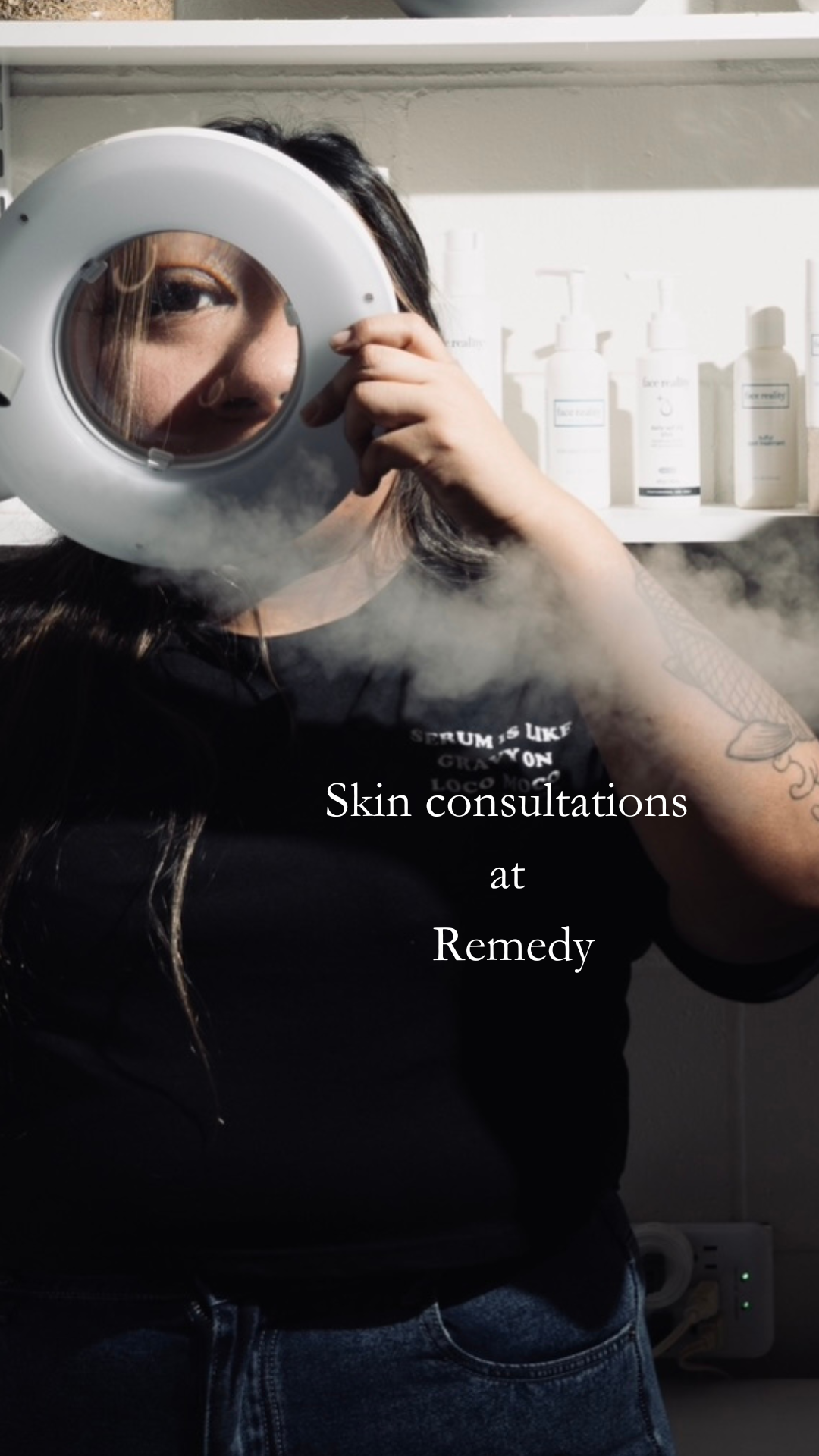
What a Skin Consultation at Remedy Actually Looks Like
If you’ve ever sat down for a facial and thought,
“Okay… but how do they really know what my skin needs?”
this is for you.
At Remedy, we don’t just cleanse your face and hope for the best. Every facial starts with a skin consultation, because skin isn’t one-size-fits-all and it’s definitely not static.
Your skin tells a story. Our job is to listen.
First things first: this isn’t about pointing out “problems”
A skin consultation at Remedy is not:
a checklist
a diagnosis
a moment to make you feel bad about your skin
It’s a conversation. It’s context. It’s understanding why your skin is behaving the way it is right now.
Because skin reacts to life: stress, hormones, sleep, food, travel, products, the ocean, the sun, your nervous system. All of it.
We start with conversation, not tools
Before any lights come out, we talk.
We ask about things like:
What you’re actually struggling with (not just what you think you “should” care about)
Breakouts, sensitivity, dryness, pigmentation
What you’re using at home (and how consistently)
Stress levels, cycles, lifestyle, environment
This matters because skin doesn’t exist in isolation.
Two people can have the same breakout and need completely different care.
Then we look, and we touch
Skin can look oily and be dehydrated.
Skin can look calm and be stressed underneath.
Skin can look “fine” and still feel off.
So we assess:
Texture
Hydration
Congestion
Sensitivity
How your skin actually feels, not just how it photographs
Touch tells us a lot.
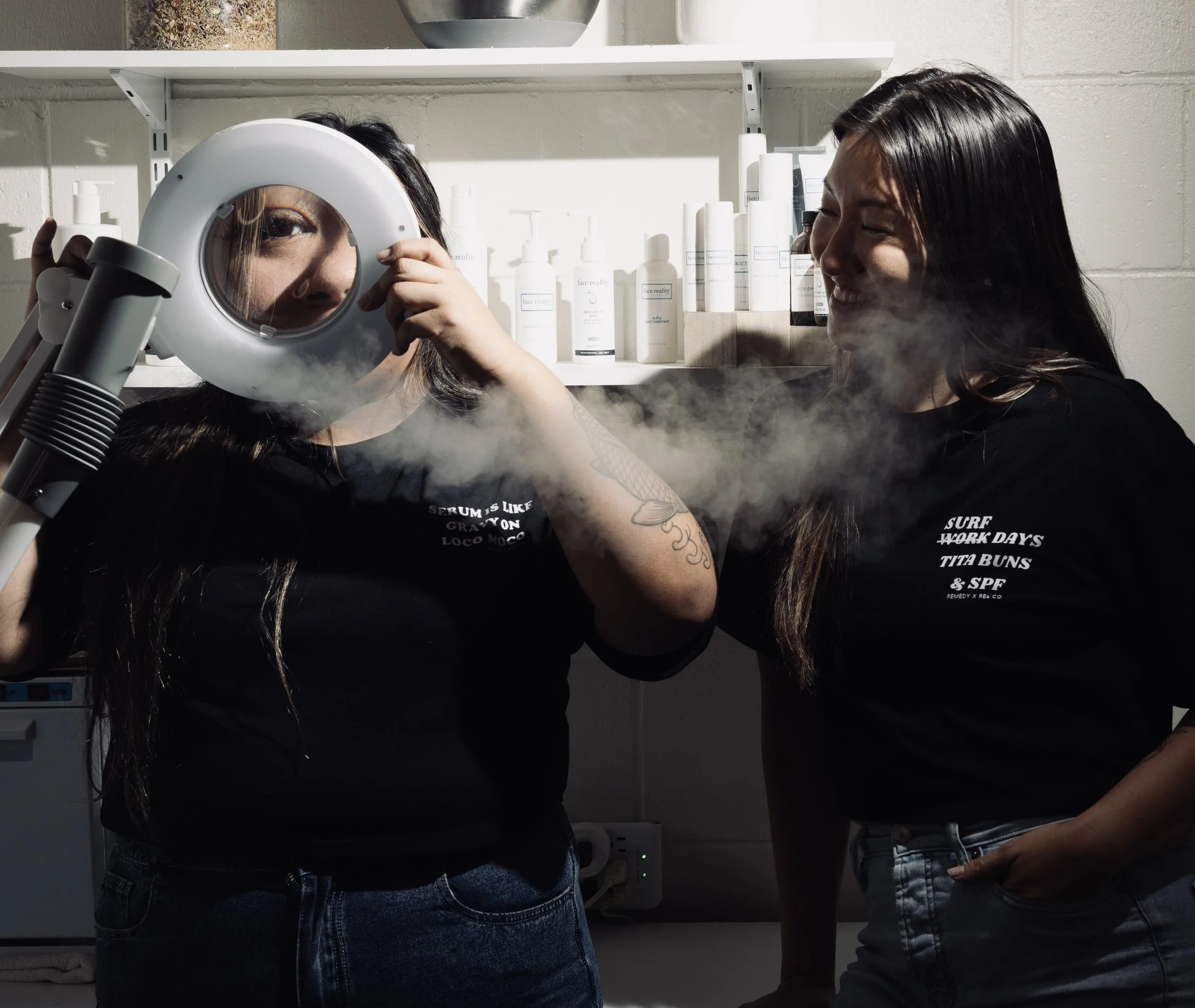
Where the Wood’s lamp comes in (and what it’s actually for)
This is usually the part people are curious about.
A Wood’s lamp is a soft UV light we sometimes use during consultations to help us see what’s happening beneath the surface of the skin, things that aren’t always obvious under regular lighting.
It’s not scary.
It’s not diagnostic.
And it’s definitely not the whole story.
It’s just another way to gather information.
What the Wood’s lamp can help highlight
When used thoughtfully, a Wood’s lamp can help us notice:
Dehydration (even if your skin is oily)
Congestion and clogged pores
Areas of excess oil production
Bacterial activity often linked with acne
Pigmentation or sun damage that hasn’t fully surfaced yet
This helps us stop guessing, and start tailoring.
About the colors (without overcomplicating it)
You might see different tones under the lamp, and people love to Google this part, but Here's what it’s about:
Blue / light blue → generally balanced, hydrated skin
Yellow tones → oiliness or congestion
Green tones → dehydration under the surface
Purple or violet → stressed or compromised skin barrier
Brown / darker areas → pigmentation or sun damage
Bright white areas → buildup or thicker skin
These are indicators, not labels. Skin changes. We read these cues alongside you, not instead of you.
How this actually changes your facial
This is the part that matters most.
What we learn during your consultation helps us:
Choose the right facial approach (not just the name of the service)
Adjust exfoliation so we’re not doing too much or too little
Support your skin barrier instead of fighting it
Treat acne, pigmentation, or sensitivity safely
Customize products used for your skin that day
Two people can book the same facial and have totally different experiences — on purpose.
And yes, it guides home care too (but gently)
We’re not here to overwhelm you with products.
Your consultation helps us recommend:
What your skin actually needs right now
What will support long-term balance
What fits your real life, not a 12-step routine
Consistency > complexity. Always.
Tools don’t replace intuition, they support it
The Wood’s lamp is helpful, but it’s not magic.
Skin health is influenced by:
Hormones
Stress
Nervous system regulation
Environment
How safe your body feels
That’s why we never rely on one tool alone. Experience, touch, conversation, and intuition all matter.
The Remedy approach (this part is important to us)
At Remedy, skin consultations are about:
Education without judgment
Awareness without fear
Support without pressure
We want you to leave understanding your skin better — not feeling like something is “wrong” with you.
So basically….
A Wood’s lamp doesn’t tell the whole story.
But when it’s used with intention, it helps us ask better questions.
And better questions lead to better care.
Healthy skin isn’t about chasing perfection.
It’s about listening, responding, and supporting your skin through the seasons it’s in.
That’s what we do here.
If you’re interested you may book a free consult!
Two Pathways, One Philosophy: How Remedy Supports Practitioners at Every Stage
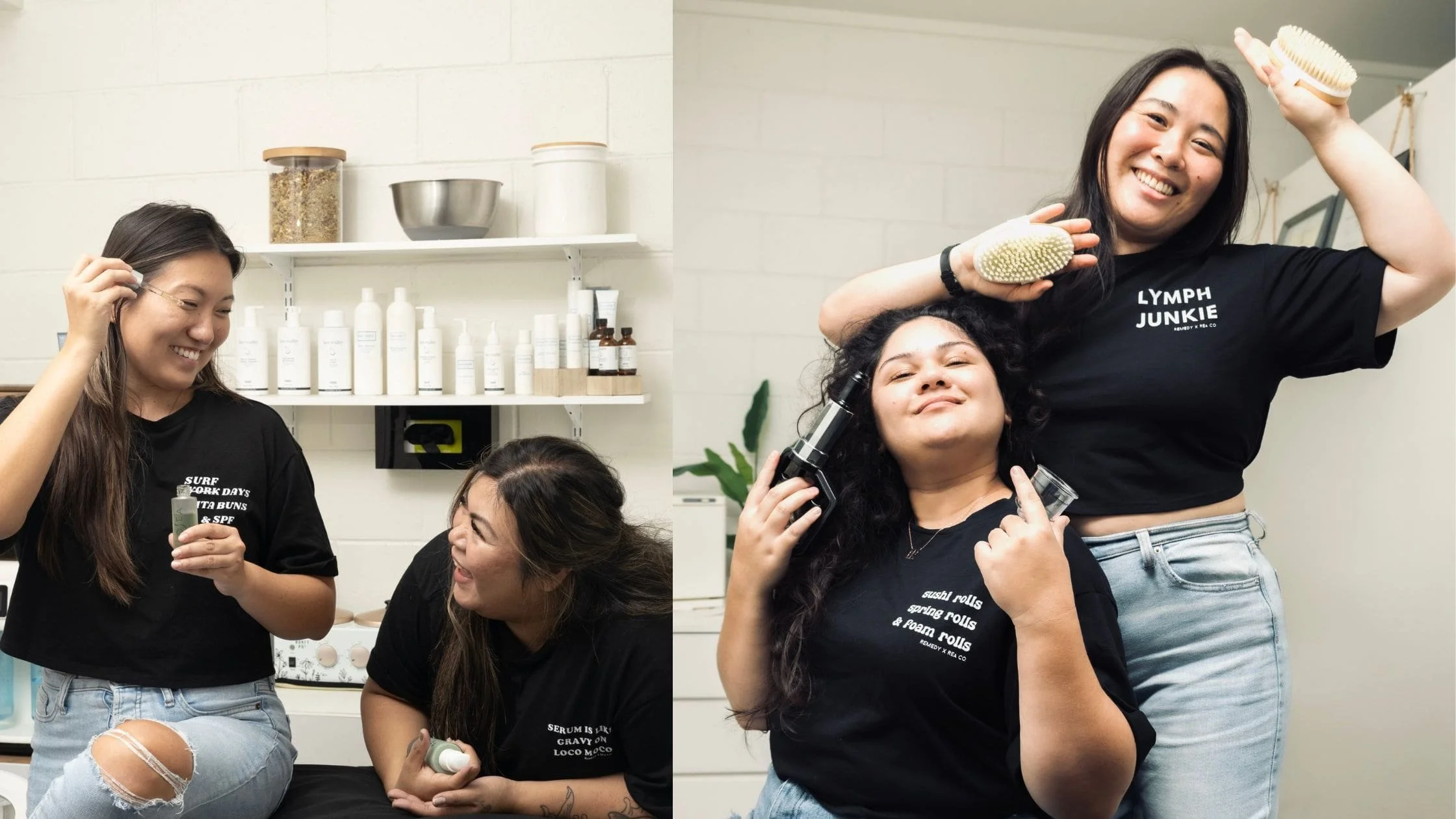
There isn’t one “right” way to enter this industry.
Some people are just beginning and need education, structure, and a clear path to licensure.
Others are already licensed and need support stepping fully into real-world practice.
At Remedy, we see both, and we built our pathways to meet practitioners where they actually are, not where the industry assumes they should be.
That’s why we offer two distinct pathways, grounded in one shared philosophy.
One Philosophy, First
Before getting into the pathways themselves, it’s important to understand what they’re built on.
At Remedy, we believe:
Learning works best when it’s integrated into real life
Mentorship matters as much as technique
Sustainability matters more than speed
Confidence is built through support, not pressure
Whether someone is pre-licensure or already licensed, the goal is the same:
to help practitioners build long-term, grounded careers without burning out early.
The Licensure Apprenticeship Pathway
(For Those Not Yet Licensed)
The Licensure Apprenticeship Pathway is designed for individuals who are not yet licensed and are seeking a studio-integrated route toward massage therapy licensure.
This pathway includes:
Required theory, anatomy, physiology, pathology, and ethics
Structured education aligned with state requirements
Supervised hands-on clinical hours that count toward licensure
Mentorship inside a real, functioning studio environment
Rather than separating education from practice, this pathway allows apprentices to learn while they’re immersed in the environment they’ll eventually work in.
As apprentices progress, they transition into paid, supervised clinical work, allowing them to earn while completing required hours. This helps reduce the financial gap that often exists between education and employment.
At this time, the licensure apprenticeship pathway is offered for massage therapy only.
The Professional Integration Pathway
(For Licensed Practitioners)
The Professional Integration Pathway is designed for practitioners who are already licensed and want support bridging the gap between licensure and confident, consistent practice.
This pathway is available to both:
Licensed massage therapists
Licensed estheticians
Integration focuses on:
Refining technique through real client work
Building confidence, pacing, and communication
Learning studio flow, standards, and expectations
Developing sustainability and longevity in the field
This is not re-schooling or retraining.
It’s about integration, turning education and licensure into embodied, confident practice inside a supportive environment.
Same Values, Different Starting Points
These two pathways aren’t separate ideas, they’re part of the same ecosystem.
The difference isn’t philosophy or quality.
It’s simply where someone is starting from.
Not licensed yet → Licensure Apprenticeship Pathway
Already licensed → Professional Integration Pathway
Both pathways emphasize:
Mentorship over micromanagement
Structure without rigidity
Growth without burnout
Real-world experience with real support
Why Integration Matters at Every Stage
Many practitioners struggle not because they lack ability, but because they’re expected to figure everything out alone.
Integration changes that.
When learning and practice happen together:
Anatomy makes sense on real bodies
Pathology is understood in context
Communication becomes natural
Boundaries are learned early
Confidence builds steadily
This applies whether you’re training toward licensure or learning how to truly step into your role as a professional.
A Continuum, Not a Fork in the Road
We don’t see apprenticeship and integration as separate tracks — we see them as a continuum of support.
Education leads to practice.
Practice leads to confidence.
Confidence leads to longevity.
Our pathways reflect the real progression of a career, not just the moment someone passes boards.
Not About Choosing the “Best” Path — But the Right One
Some people thrive in traditional classroom settings.
Some thrive through hands-on, integrated learning.
Neither is wrong.
What matters is choosing a path that:
Matches how you learn
Supports your nervous system
Aligns with your life and responsibilities
Helps you stay in the industry long-term
At Remedy, our role isn’t to push one path, it’s to offer thoughtful, ethical options grounded in real support.
Supporting the Whole Practitioner
Whether someone enters through apprenticeship or integration, the intention is the same:
to support practitioners as whole people, not just service providers.
Because when practitioners are supported:
Clients feel it
Work becomes sustainable
Careers last
Learn more about each pathway
Apprenticeships vs Traditional School: The Remedy Way

At Remedy, we believe in being honest about what each path actually offers, and why we intentionally built our apprenticeship model the way we did. If you’re considering a career in massage therapy or esthetics, you’ve probably been told there’s only one “right” way to get licensed: traditional school
But that’s not the full picture.
There are two legitimate paths to licensure, and understanding the difference can help you choose the one that actually fits how you learn, work, and grow.
This isn’t about saying one is better than the other.
It’s about clarity.
Traditional School: Classroom-Based Education
Massage and esthetics schools play an important role in this industry.
They are designed to:
Teach foundational theory
Cover anatomy, physiology, pathology, and ethics
Prepare students to pass state licensing exams
Introduce techniques in a structured academic setting
For people who thrive in classrooms, lectures, and clearly defined coursework, traditional school can be a great fit.
In most cases, this model is tuition-based, students pay for education, complete required hours, graduate, and begin earning after licensure.
That structure works for many learners.
What it doesn’t always provide is real-world context.
Where the Gap Often Shows Up
Many graduates leave school technically prepared, yet still unsure.
Not because they didn’t learn enough, but because:
Learning was separated from real studio environments
Hands-on experience was limited or simulated
Professional expectations weren’t fully integrated
The transition into real client work felt abrupt
This gap between education and application is where a lot of new practitioners feel overwhelmed.
That’s where apprenticeship pathways come in.
What an Apprenticeship Actually Is (and Isn’t)
There’s a lot of confusion around apprenticeships, so it’s important to be clear.
A legitimate apprenticeship is not:
Skipping education
Cutting corners
Unpaid labor
“Learning as you go” with no structure
A state-recognized apprenticeship still includes:
Theory
Anatomy & physiology
Pathology
Ethics
Supervised hands-on hours required for licensure
The difference isn’t what is taught.
It’s how and where the learning happens.
The Remedy Apprenticeship Model: Education Integrated Into Practice
At Remedy, our licensure apprenticeship pathway was built for people who learn best through integration.
Instead of separating:
education → graduation → work
We combine:
education + supervised practice + studio integration
from the beginning.
Apprentices receive:
The same foundational education required for licensure
Structured coursework in anatomy, physiology, pathology, and theory
Supervised hands-on practice with real clients
Ongoing mentorship inside a functioning studio
Learning doesn’t happen in isolation, it happens in context.
Learning While Working and Earning
One of the biggest differences between traditional school and an apprenticeship pathway is when earning begins.
In traditional programs, education is typically tuition-only. Students focus on learning first and don’t begin earning until after graduation and licensure.
In the Remedy apprenticeship model, there is still a tuition component for the educational portion of training, but apprentices transition into paid, supervised clinical work as part of their pathway.
This means:
You’re earning while completing required hands-on hours
Real client work helps offset the cost of The Tuition paid in the Educational portion of training
There’s less of a financial gap between learning and working
Training feels more sustainable, especially for career-changers
possible continued employment
This isn’t about shortcuts or free labor.
It’s about acknowledging that real work has value, even while you’re still learning.
Why Learning in Context Matters
When education happens inside a real studio:
Anatomy makes sense because you feel it on real bodies
Pathology is understood as it presents, not just memorized
Communication skills develop naturally
Professional standards become habits, not rules
smaller cohort = more one on one, more intimate settings
Instead of asking “How will this work in real life?”
You’re already living it, with guidance.
This Path Isn’t Easier, Just Different
Apprenticeship is not the “easy route.”
It requires:
Consistency
Accountability
Time management
Emotional maturity
Willingness to receive feedback
You’re learning and showing up professionally at the same time.
For some people, a classroom-first environment feels safer.
For others, integrated learning builds confidence faster.
Both paths are valid.
Burnout Prevention Starts During Training
Another key difference between the two models is when sustainability is taught.
In an integrated apprenticeship, practitioners learn early:
How to pace their bodies
How to manage energy
How to hold boundaries
How to work sustainably inside a studio
Instead of burning out and fixing habits later, practitioners are supported before burnout begins.
Same License. Different Experience.
Both traditional schools and apprenticeships lead to the same outcome:
✔️ Licensure
✔️ Eligibility to practice
The difference is the experience of getting there.
Traditional school
Tuition-based education
Learn first, earn later
Transition into work after graduation
Remedy apprenticeship
Tuition + paid supervised practice
Learn and earn together
Integrate into real work gradually
Neither path is wrong.
One may simply fit your life better.
Choosing the Right Path Is Personal
Some people thrive in classrooms.
Some people thrive through hands-on learning.
The best choice is the one that:
Matches how you learn
Supports your nervous system
Prepares you for real work
Helps you stay in the industry long-term
At Remedy, our apprenticeship pathway exists because we saw too many talented people struggle, not from lack of ability, but from lack of integration.
A Thoughtful Alternative, Not a Replacement
Our goal isn’t to replace traditional schools or compete with them.
It’s to offer another legitimate, thoughtful path to licensure, one that blends education, mentorship, real-world practice, and paid experience inside a supportive studio environment.
Because how you’re trained shapes how long you stay.
Explore the Remedy Licensure Apprenticeship Pathway
A studio-integrated path to licensure combining education, mentorship, real-world experience, and paid clinical practice.

Is an Apprenticeship Right for You?
A Quick Self-Check for Future Practitioners
There’s no “better” path, just the one that fits you.
If you’re deciding between traditional school and an apprenticeship pathway, this quick self-check can help you get clearer without overthinking it.
No pressure. No selling. Just honesty.
Quick Check: Answer Yes or No
1. Do you learn best by doing, not just listening?
You understand things faster when you can practice, observe, and apply — not just read or memorize.
☐ Yes ☐ No
2. Do you want real-world experience while you’re still learning?
You’re curious about what studio life actually looks like and don’t want your first real client experience after training ends.
☐ Yes ☐ No
3. Are you comfortable learning in a professional environment early?
You’re open to showing up on time, communicating professionally, and learning studio standards as part of your education.
☐ Yes ☐ No
4. Do you want to earn while you learn?
You’re okay with tuition for education — but value the ability to transition into paid, supervised clinical work during training instead of waiting until graduation.
☐ Yes ☐ No
5. Are you open to feedback and mentorship?
You don’t expect perfection — and you’re willing to learn through guidance, correction, and support.
☐ Yes ☐ No
6. Do you prefer structure over total flexibility?
You do better with clear expectations, schedules, and benchmarks rather than figuring everything out on your own.
☐ Yes ☐ No
7. Are you thinking about longevity, not just licensure?
You care about pacing, boundaries, and staying in the industry long-term — not just getting licensed as fast as possible.
☐ Yes ☐ No
8. Are you looking for something long-term, not just a quick license?
You’re thinking beyond “getting through school” and care about building a career that’s sustainable, aligned, and something you can stay in.
☐ Yes ☐ No
Your Results
Mostly “Yes”
An apprenticeship pathway may be a strong fit for how you learn and grow.
You might benefit from:
Integrated education
Real-world practice early
Mentorship and structure
Learning and earning together
Mostly “No”
A traditional classroom-based school may feel more supportive for you, especially if you prefer learning first and applying later.
That’s not a failure or a limitation. It’s just a different learning style.
A Mix of Both
You’re not alone.
Many people benefit from one model more than the other depending on:
Life stage
Learning style
Financial needs
Comfort with responsibility
The best choice is the one that supports you where you are right now.
There’s No Wrong Answer
Both paths lead to licensure.
Both can create strong practitioners.
What matters most is choosing a training environment that:
Matches how you learn
Supports your nervous system
Helps you grow with confidence
Curious What an Integrated Apprenticeship Looks Like?
If you’re exploring a studio-integrated path to licensure that blends education, mentorship, real-world experience, and paid clinical practice, you can learn more here:
Explore the Remedy Licensure Apprenticeship Pathway
Explore the Remedy Licensure Apprenticeship Pathway
A studio-integrated path to licensure combining education, mentorship, real-world experience, and paid clinical practice.

Why studio Integration Matters for Newly Licensed Practitioners
Getting licensed is a milestone.
But it’s not the finish line, it’s the handoff point.
For many massage therapists and estheticians, the hardest part of the career doesn’t come during School. It comes right after, when you’re expected to suddenly function like a fully formed professional with little guidance.
this is where studio integration matters.
Licensure doesn’t equal readiness
School teaches theory, technique, and safety.
What it doesn’t teach is how to:
work inside a Real Studio with real Expectations.
bridge the gap between theory and hands-on practice.
navigate client Communication, timing And flow
Understand patholgy in context, not just memorized conditions
adapt when bodies, skin, or Symptoms don’t resent “by the book”
Licensure means you’re allowed to practice, not that you’ve had enough practice yet.
The gap between school and real work is where people get lost
newly licensed practitioners often fall into one of two Situations:
thrown into a full schedule too fast
left uneerbooked with no direction
both lead to doubt, burnout, or leaving the industry altogether. studio Integration fills that gap.
What studio integration actually means
studio Integration isn’t just “having a job”
it’s being Intentionally brought into:
a team
a flow
a standard of care
a culture
it’s the difference Between working somewhere and being supported Somewhere.
Confidence is built through consistency not pressure
Confidence doesn’t come from being pushed harder.
it comes from:
repetition
feedback
observation
time
integrated Environments allow practitioners to build skill and Trust gradually, without fear of failure.
Clients benefit when practitioners are integrated
clients can feel when someone is unsupported.
integrated practitioners:
stay present
Communicate clearly
maintain Boundaries
Deliver consistent care
that’s not accidental, it’s Environmental.
Mentorship is what tuns skill into mastery
most licensed practitioners have ability:
what they’re missing is:
real-time feedback
context
perspective
reassurance
studio integration provides mentorship without shame or Hierarchy.
Studio standard protect both practitioner and client
clear standards reduce stress.
integrated studios provide:
defined service flow
clear timing expectations
Communication guidelines
boundary support
when Expectations are clear, Confidence follows.
Studio integration supports longevity
careers Aren’t build on intensity- they’re built on sustainability.
Integrated practitioners:
learn pacing early
avoid injury and burnout
build consistency
stay in The industry longer
this benefits everyone.
Without integration, many talented Practitioners disappear
the industry doesn’t lose people because they aren’t good enough.
it loses them because they’re unsupported during the most vulnerable stage of their career.
studio Integration isn’t Extra, it’s essential.
A place to land after licensure matters
at remedy, we believe licensed massage therapists and Estheticians deserve more than a sink-or-swim start.
studio Integration means:
real work
real support
real growth
because what happens after Licensure determines whether someone stays or burns out.
Explore the remedy Integration pathway
learn how supported Studio Integration helps licensed practitioners build confidence, consistency, and longevity.


You’re licensed! Now what?

The Part of Massage & Esthetics no one talks about
Getting licensed Doesn't mean you’re ready, it means you’re at the starting line. Here’s why so many practitioners struggle after school, and What actually helps.
you did the thing.
You went to school. You studied. you passed the Boards. and you got licensed.
and then.. Reality hit.
if you’re a newly licensed massage therapist or Esthetician and you’re thinking… “Why does this feel harder than I expected?” you’re not alone. in fact, most people feel it. they Just don’t talk About it.
here’s the part no one really prepares you for.
School was hard - but the real world is harder.
Massage and esthetics school teaches you the foundations and how to pass The exams. The real world teaches you how to work One Ear bodies, real skin, and real people with expectations.
Clients don’t come in textbook-perfect. They come in tired, in pain, overstimulated, stressed, or frustrated because nothing has Worked for them yet.
The transition alone can feel overwhelming.
Being in the field with People who’ve been dong it longer can shake your confidence.
You step into your first job and suddenly you’re surrounded by practitioners who move faster, sound more confident, and seem to “just know.”
It’s easy to start comparing:
Your pressure
your flow
your results
your pace
And quietly wonder if you’re behind. You’re not. you’re just new.
CEU’s don’t automatically equal confidence
Continuing education matters.
learning never stops in the industry.
But here’s the truth: no Amount of classes replaces hands-on reps, real feedback, and being guided in real time.
You don’t gain confidence by collecting certifications. you gain it by doing the work - over and over with support.
No clients + no revenue (this is where most people give up)
This Is the breaking point for a lot of licensed practitioners.
You’re motivated. you’re capable. Bit if you’re not booked, you’re not earning, or getting the Experience You need.
No Clients means:
no consistency
No confidence boost
no momentum
And this is where many People quietly leave the industry, not because they weren’t good, but because they didn’t have a way to build.
Real Clients want real results
Clients aren’t grading your technique, or the amount of Strokes you did on one side = to the other side
they want to:
feel relief
see improvement
Trust your recommendations
feel safe in your care
results come from presence, communication, consistency, and Experience- not perfections.
Burnout happens earlier than people expect
No one really talks about this part.
New practitioners often:
overbook
go over time
say yes to everything
skip breaks
Ignore their own bodies
all before they’re even financially stable. burnout Doesn’t mean you’re weak it means you weren’t taught boundaries early enough.
School didn’t teach you how to Survive in this industry.
most programs don’t cover:
rebooking Conversations
client Communications
energy management
pacing your body
confidence in Pricing
professional Boundaries
Those are learned in the field, or not at all.
Environment matters more than talent
this one is important.
the wrong Environment can drain even the most gifted practitioner. the right environment can help someone grow into their potential.
talent doesn’t thrive in isolation. it Grows with mentorship, structure, And support.
You don’t need more talent, you need integration
if you’re feeling stuck after licensure, the problem usually isn’t your ability.
it’s the gap between:
school and real work
learning and doing
potential and execution
you don’t need another class. you need a place to integrate What you’ve learned into real practice.
The Solution: supported employment integration
at remedy, we see this gap all the time, which is why our Focus isn’t on selling programs or stacking certifications.
We believe in employment integration:
real clients
real reps
real mentorship
real feedback
real Growth
a place to land, learn, and build Confidence while actually working.
Because being licensed doesn’t mean you’re finished. it means you’re beginning
if you’re licensed and feeling User, overwhelmed, or Undercooked- you’re not failing.
you’re just in the part no one explained.
and you don’t have to figure it out alone.
If this resonated, here’s where to go next…

From First Time to Regular: What to expect on your hair removal journey
Your first wax or sugar can feel intimidating, we get it. At Remedy Studio, we’ve helped countless clients go from nervous first-timers to confident regulars who actually look forward to their appointments.
Here’s what to expect, what’s normal, and how to make every session smoother (literally).
The First Visit: Getting Comfortable
If it’s your first wax or sugar, your skin might feel extra sensitive and your nerves might be high — totally normal. Our estheticians take time to walk you through every step, from prep to aftercare, so you always feel comfortable and in control.
You can expect:
A quick consultation to discuss your goals, and sensitivities.
Clean technique, professional products, and a nonjudgemental environment.
Education about whether waxing or sugaring fits you best.
Understanding Hair Growth: Shaving vs. Waxing or Sugaring
If you’re used to shaving, your hair grows in uneven cycles: some short, some long, some brand-new under the surface. That’s why your first wax or sugar can feel a little inconsistent. You might notice some hairs stay behind or grow back sooner than others, and that’s totally normal.
Shaving cuts the hair blunt at the surface, so when it grows back it feels thicker and sharper. Waxing or sugaring, on the other hand, removes the hair from the root. But during your first visit, not every follicle is on the same schedule, which means some new growth may appear within a week or two as the cycles “sync up.”
* Think of it as a reset: it takes about 2–3 appointments for all the hair to grow on the same rhythm. Once it does, results last longer, feel smoother, and regrowth becomes finer.
Why Hair Breakage Happens After the First Visit
During that initial appointment, a little bit of hair breakage can occur, especially if you’ve been shaving regularly or your hair is very short or coarse. When the hair isn’t long enough to fully grip at the root, it can snap at the surface instead of being removed completely. pin point bleeding happens when the bulb or the root is removed, as time continues and waxing/sugaring is a normal routine this stops happening.
That’s why we recommend letting your hair grow at least a quarter-inch (roughly a grain of rice) before your service. Longer hair gives the wax or sugar paste a better hold, resulting in cleaner removal and longer-lasting smoothness.
Our estheticians are trained to minimize breakage with gentle techniques, clean prep, and calm pacing. Even if you experience a little uneven regrowth the first time, it’s part of the process, and it evens out beautifully by your second or third visit.
*The first appointment is about trust, not perfection. It’s the start of a longer journey to smoother, softer skin.
The Second Visit: Less Hair, Less Sensitivity
By your second session, your hair growth has already begun to sync with the removal cycle. Translation? It hurts less, grows back slower, and feels softer. as long as there was no shaving in-between visits And is scheduled within the 3-4 week regrowth!!!!!
You’ll notice:
Finer regrowth (especially around 3–4 weeks).
Fewer ingrown hairs (especially if you’re exfoliating).
A smoother, cleaner finish that lasts longer.
This is the point where most clients realize how much easier consistent care feels compared to shaving.
The Third Visit and Beyond: Maintenance & Confidence
After your third visit, your body adjusts, your hair grows in the same direction, and your skin gets used to the process. Appointments become faster with way less pain.
At this stage:
You’ll start to see less density and thickness overall.
Most clients can go 4–5 weeks between visits.
Your results last longer with each cycle.
This is where waxing or sugaring becomes part of your Remedy ritual, something you look forward to because you know how confident you’ll feel afterward.
The Remedy Difference
What makes our waxing and sugaring different isn’t just the products, it’s our approach. Every session includes:
Clean technique and gentle products that protect your skin barrier.
Education on exfoliation, hydration, and aftercare.
Empathy and comfort: we never rush, we create space for you to relax. client safety is priority.
Whether you’re a first-timer or a loyal member, we want you to feel safe, supported, and celebrated in your own skin.
Ready to Begin Your Waxing Journey?
Start your smooth-skin era the Remedy way.
Book your Waxing or Sugaring Appointment at Remedy Studio, and let us walk you from first-time nerves to long-term confidence.

Brazilian Lymphatic our elevated experience
Discover Remedy’s Elevated Brazilian Lymphatic — featuring dry brushing, OSEA, and infrared light therapy for next-level detox and flow.
The lymphatic system is your body’s built-in detox network. moving fluid, fighting inflammation, and keeping you feeling light.
At Remedy Studio, our Elevated Brazilian Lymphatic takes it a step deeper. We combine traditional Brazilian techniques but pair it with dry brushing, OSEA’s Vagus Nerve Oil, and infrared light therapy to create a ritual that supports your body, mind, and glow from the inside out.
This isn’t just a massage, it’s a full-body reset.
1: OSEA Vagus Nerve Oil — Calming the Nervous System
Before each Treatment, We use OSEA’s Vagus Nerve Oil, a clean, ocean-inspired blend designed to calm your mind and reset your nervous system. breathing is a foundational tool to help encourage the flow of lymph.
When your body is relaxed, your lymphatic flow increases. The Vagus Nerve Oil helps activate the parasympathetic state, what we call rest, digest, and repair. You’ll feel your breath deepen, your body soften, and your mind begin to slow down. a gentle way to expedite the transition.
We believe true detox isn’t just physical, it’s energetic. That’s why every element of the Elevated Experience is designed to ground you back into yourself.
2: Dry Brushing — Stimulating the Flow
entrance of the body is important as we begin with gentle dry brushing to awaken circulation and prepare the lymphatic vessels.
This technique removes dull surface skin, boosts oxygen flow, and activates the lymph system so your body can release excess water and waste more effectively. The result? A brighter, smoother, more energized feeling before the hands-on work even begins.
Each brushstroke is intentional, rhythmic, directional, and aligned with your body’s natural flow.
3: Infrared Light Therapy — Healing from the Inside Out
we incorporate infrared light therapy, a gentle but Powerful tool, radiant heat that penetrates beneath the skin to enhance circulation, reduce inflammation, and support lymphatic drainage.
It’s more than relaxation, it’s regeneration. Infrared light helps your cells absorb oxygen more efficiently and supports detoxification at a cellular level. Many clients describe this step as the moment they feel their “Remedy Reset” a wave of calm that leaves them lighter, sculpted, and deeply restored.
Why the Combination Works
Each layer of this experience is designed to enhance the next:
OSEA calms the nervous system for deeper release.
Dry brushing opens the pathways.
Infrared light amplifies the detox and glow.
Together, they create a flow that continues long after you leave the table, helping your body flush inflammation, reduce bloating, and reveal a softer, sculpted silhouette.
This is more than a treatment. It’s a ritual of renewal.
Who It’s For
The Elevated Brazilian Lymphatic is ideal for:
Post-travel or post-event recovery
Bloating or inflammation
Stress and fatigue
Anyone ready to reconnect with their body
Whether you’re an athlete, a traveler, or someone simply craving reset, this flow helps you come home to yourself.
to be lighter, calmer, and deeply restored. Experience the Flow.

The Remedy Massage: What Makes it different from a regular massage
Not all massages are created equal. The Remedy Massage is designed to do more than relax you, it resets your system from the inside out. Experience the treatment locals swear by and see why wellness, but local, feels different. Book your Remedy session today.
If you’ve ever walked out of a massage feeling like it was... fine, but something was missing, you’re not alone.
Too often, massages are treated like assembly-line experiences. A checklist of moves. A timer. A one-size-fits-all approach that forgets the most important part of the service: you.
At Remedy, we do things differently.
Our most requested service, the Remedy Massage, was designed to bring intention back into bodywork, to bridge the gap between relaxation, and results. It’s a massage built around your body, your story, and your goals.
1. Every Session Begins with Intention
Before we even begin, we ask: What does your body need today?
Some days, it’s recovery from training. Other days, it’s stress release. Sometimes, it’s both. We set an intention with you before the first touch, because intention shapes how we approach your body. your body is also ever changing. one day your foot might be sore, the next it’s your neck. or some of you may be on a Maintenance Schedule, but suddenly another area of your body is in need, and we need to redirect some of the Focus else where.
2. We Don’t Follow a Script
There’s no “cookie-cutter” flow here. no
Our therapists are trained to read your body, to listen through touch, and to adapt in real time. Each therapist follows the Remedy standard: specific techniques and signature movements that define our service. but how it comes together depends on you. No two Remedy Massages ever look the same, because no two clients are the same. there’s nothing you won’t get from one Therapist that you wouldn’t get from another therapist. all therapists are trained in all the same modalities.
3. It’s Where Technique Meets Intuition
Our approach blends therapeutic and relaxation techniques, creating a flow that feels restorative and transformative. Whether it’s focused work on chronic tension or slow, intentional strokes to reset the nervous system, we meet your body where it’s at. It’s not about pushing harder, it’s about working smarter with what your body tells us. less is more in some cases.
4. The Remedy Standard
Every therapist at Remedy commits to a shared foundation of excellence. from flow, communication, and professionalism, to understanding anatomy and energy. But beyond that foundation, we give our team the space to bring their artistry and intuition forward. That’s what makes each session deeply personal, yet undeniably Remedy.
5. The Result
Clients often describe the Remedy Massage as feeling “different.” Not just physically, but emotionally and energetically. You leave feeling seen, heard, and balanced, like your body and mind are finally on the same page again.
Therapeutic or relaxing, every Remedy Massage starts with one question: What do you need today?
Because at Remedy, we believe healing isn’t a formula, it’s a feeling.

OSEA + Hawaii: The Perfect Skincare for Life in the Sun
Living in Hawaiʻi means year-round sunshine, salt air, and ocean dips — and your skin needs products that can keep up. That’s why we love OSEA. This Malibu-born brand creates clean, vegan, seaweed-based skincare designed to deeply hydrate, soothe, and replenish sun-exposed skin.
OSEA’s mineral-rich seaweed extracts and botanical actives help restore the skin barrier after UV exposure, reduce inflammation from heat and salt, and lock in lasting hydration without feeling heavy or greasy, ideal for humid, tropical climates.
OSEA supports radiant, resilient skin all year long. Every formula is non-toxic, reef-safe, cruelty-free, and sustainably sourced, making it a perfect fit for our island lifestyle and values.
Living in Hawaii means sunshine, salt water, and outdoor living, but it also means extra care for your skin. Constant sun exposure, ocean dips, and trade winds can leave skin dehydrated, sun-stressed, and in need of serious repair. That’s why we love OSEA at Remedy. Inspired by the ocean and made with clean, hydrating ingredients, OSEA is the perfect fit for island life.
✨ Why Sun + Salt Stress the Skin
Dehydration: UV exposure + salt water pull moisture from the skin.
Oxidative Stress: Sunlight creates free radicals that break down collagen, leading to premature aging.
Barrier Damage: Wind, sweat, and environmental stressors strip the skin’s protective barrier.
Pigmentation: UV exposure triggers dark spots and uneven tone.
✨ How OSEA Helps Repair & Protect
1. Seaweed Power
OSEA’s foundation ingredient — seaweed — is rich in minerals and antioxidants. It helps remineralize skin, replenish hydration, and fight oxidative stress from the sun.
2. Deep Hydration
Formulas like the Hyaluronic Sea Serum and Sea Minerals Mist restore moisture balance, keeping skin plump and refreshed even after a beach day.
3. Barrier Support
Plant oils (like jojoba + sesame) strengthen the skin barrier so it can handle daily sun + salt exposure without irritation.
4. Anti-Aging Protection
OSEA products are loaded with antioxidants that neutralize free radicals, helping prevent collagen breakdown and fine lines caused by UV damage.
✨ Our OSEA Picks for Sun Lovers
Ocean Cleanser: Gentle cleanse without stripping after salt water + sweat.
Sea Minerals Mist: Instant refresh + hydration boost.
Hyaluronic Sea Serum: Quenches thirsty, sun-stressed skin.
Atmosphere Protection Cream: Lightweight daily moisturizer with antioxidant protection.
Undaria Algae Body Oil: Restores glow + hydration after sun and salt.

Flower Steam: What It Is and Why We Love It
Our signature Flower Steam is a gentle, aromatic facial steam infused with hand-selected botanicals designed to open pores, soften skin, and calm the senses. This holistic ritual uses the power of warm steam and floral phytonutrients to boost circulation, enhance product absorption, and prepare the skin for deeper cleansing or treatment.
There’s something magical about starting a facial with warm steam infused with flowers. At Remedy, our flower steam isn’t just about relaxation, it’s a therapeutic step that preps your skin, calms your mind, and elevates your entire facial experience. Here’s what it does, why it helps, and what we include in ours. Where details matter, and why every step is intentional.
✨ What Is our Botanical Flower Steam?
Flower steam is a gentle stream of warm, hydrated air infused with botanicals. It’s designed to:
Open pores
Loosen buildup and congestion
Hydrate skin
Prepare the face for cleansing and extractions
The addition of flowers makes it both therapeutic and sensory, adding benefits beyond basic steam.
✨ Benefits of Flower Steam
1. Preps Skin for Treatment
Warm steam softens the outer layer of skin and opens pores, making cleansing and extractions more effective.
2. Boosts Circulation
Steam increases blood flow, delivering oxygen and nutrients to the skin for a natural glow.
3. Hydration Support
Steam helps skin absorb serums and masques more deeply during your facial.
4. Relaxation + Aromatherapy
Flower infusions release subtle scents that calm the nervous system, setting the tone for rest and reset.
5. Gentle Detox
Encourages the skin to purge impurities in a non-invasive way.
✨ What’s in Remedy’s Flower Steam
We blend botanicals designed for both skin and spirit:
Chamomile → calming, anti-inflammatory, perfect for sensitive skin.
Rose → hydrates and soothes while promoting a radiant glow.
Lavender → calming, antibacterial, and stress-relieving.
Calendula → healing, reduces redness and irritation.
Jasmine → softening, antioxidant protection, and anti-inflammatory
Rosemary →circulation boost, astringent effect, and antimicrobial benefits

Our acne treatments: explained
Acne is one of the most common skin concerns we see at Remedy and it’s not just a teenage thing. Stress, hormones, lifestyle, and even product choices all play a role. The good news? Acne is treatable. A proven system that combines professional treatments with customized at-home care. Here’s what really causes breakouts and how your esthie bestie can help clear your skin.
✨ What Causes Acne?
1. Excess Oil Production
Overactive sebaceous glands clog pores.
2. Dead Skin Build-Up
Skin cells shed irregularly, creating blockages.
3. Bacteria
C. acnes bacteria thrive in clogged pores, leading to inflammation.
4. Hormones & Stress
Hormonal fluctuations + stress spikes can trigger acne flare-ups.
5. Lifestyle Factors
Diet, sleep, makeup, everyday use products, and sweat can all contribute.
✨What to expect?
Personalized Plans: No two acne cases are the same. We customize your treatment + home routine to your unique skin.
Professional-Grade Products: Acne-safe, non-comedogenic, and tested for real results.
Accountability & Coaching: Clear skin takes consistency, we walk with you every step of the way.
Proven Results: Thousands of success stories nationwide (and right here at Remedy).
✨ Professional Treatments at Remedy
Acne Facials: Deep cleansing, extractions, and calming masks to reduce inflammation.
Chemical Peels (if skin is ready): Controlled exfoliation to improve cell turnover.
LED Light Therapy: Targets acne-causing bacteria and speeds healing.
Progress Tracking: We monitor your skin over time to adjust your plan.
✨ At-Home Routine
What you do at home makes or breaks your results. A Face Reality regimen usually includes:
Gentle Cleanser – Balances without stripping.
Targeted Treatment – Ingredients like mandelic acid or benzoyl peroxide (prescribed based on your skin type).
Moisturizer – Yes, acne-prone skin still needs hydration.
SPF – Protects against dark spots and scarring.
Lifestyle Guidance – Diet, stress, and product swaps that support healing.
✨ Why You Need Both: Professional + Home Care
Facials and treatments clear pores and calm inflammation. Daily Face Reality home care keeps skin on track between visits. Together, they create long-term results , not just temporary fixes.

Professional Facial vs. At-Home Routine: Why You Need Both
One of the biggest questions we get at Remedy is: “If I have a good skincare routine at home, do I really need professional facials?” The truth is yes, and vice versa. Professional facials and at-home routines aren’t meant to replace each other. They work hand in hand to give you glowing, healthy skin. Here’s why both matter.
✨ Why Professional Facials Matter
1. Deeper Cleansing
At home, your cleanser does a lot, but professional facials use steam, exfoliation, and tools (like scrubbers or extractions) to clear buildup you can’t reach yourself.
2. Customized Treatments
Your skin changes with seasons, stress, and lifestyle. A professional esthetician can analyze your skin in real time and adjust products or techniques to what you actually need.
3. Advanced Tools & Products
From scrubbers to masques, and professional-grade serums, facials go deeper than anything over-the-counter. They’re designed for results you can’t replicate at home.
4. Relaxation + Reset
A facial isn’t just skincare, it’s a nervous system reset. At Remedy, our facials include massage and hot towels, helping your whole body relax while your skin renews.
✨ Why At-Home Routines Matter
1. Consistency Is Everything
What you do daily matters more than what you do once a month. A simple routine (cleanse, treat, hydrate, protect) keeps your results going.
2. Barrier Support
Daily moisturizers, serums, and SPF maintain the skin’s protective barrier so treatments last longer.
3. Prevention
Facials correct, at-home routines prevent. Daily care helps minimize issues like breakouts, dullness, or dryness before they start.
✨ Why You Need Both
Think of it like the gym:
Facials = personal training sessions → targeted, corrective, results-driven.
At-home care = your daily workouts → maintain progress and prevent setbacks.
Without facials, your routine only goes surface-deep. Without at-home care, your facial results fade quickly. Together, they give you long-term, glowing skin.

Infrared light, cupping, scraping
At Remedy, we offer a variety of tools to enhance your massage experience. Three of the most popular are infrared therapy, cupping, and scraping. They all support circulation, healing, and tension release, but in different ways. If you’ve ever wondered which one is right for you, here’s your guide.
✨ Infrared Therapy
What It Is: Uses invisible light waves to warm tissues from the inside out.
How It Feels: Gentle, soothing heat that penetrates deeper than a heating pad.
Benefits: Improves circulation, speeds muscle recovery, supports detox, boosts skin glow, and calms the nervous system.
👉 Best For: Overall relaxation, muscle recovery, skin radiance, and stress relief.
✨ Cupping
What It Is: Suction cups placed on the skin to create negative pressure. We use silicone or plastic cups for safe, controlled results.
How It Feels: A pulling, stretching sensation. Sometimes leaves temporary marks (not bruises, but signs of stagnation release).
Benefits: Increases blood flow, loosens fascia, reduces muscle tension, and supports detox.
👉 Best For: Tight, overused muscles, stagnant areas, clients who like deeper therapeutic work.
✨ Scraping (Gua Sha)
What It Is: A flat tool is used to gently “scrape” the skin’s surface, breaking up fascial adhesions and improving circulation.
How It Feels: Firm strokes, can feel intense but deeply relieving. May cause temporary redness (a normal sign of circulation).
Benefits: Releases tension, improves mobility, reduces fascial restrictions, and speeds recovery in sore areas.
👉 Best For: Chronic tension, fascia tightness, athletes, and areas where stretching alone isn’t enough.

The Vagus Nerve| Why It Matters + How Vagus Nerve Oil Helps You Relax
You’ve probably heard the phrase “mind-body connection,” but did you know there’s an actual nerve that makes it happen? It’s called the vagus nerve, and it’s responsible for calming stress, improving digestion, and putting you into that blissful rest-and-digest state. At Remedy, we love working with the vagus nerve during our R+R treatments, and one of our favorite tools is the OSEA Vagus Nerve Oil. Here’s why it’s such a game-changer.
✨ What Is the Vagus Nerve?
It’s the longest cranial nerve in your body.
Runs from your brain down to your gut, touching the heart, lungs, and digestive organs along the way.
Acts like the “off switch” for stress, signaling your body to calm down.
When activated, it slows heart rate, lowers blood pressure, eases anxiety, and boosts digestion.
✨ Why Supporting the Vagus Nerve Matters
Modern life = constant stress. If your vagus nerve is underactive, you may feel stuck in “fight or flight,” leading to tension, poor sleep, gut issues, or even burnout. Stimulating the vagus nerve is like giving your nervous system a reset button.
✨ OSEA’s Vagus Nerve Oil
A soothing blend of chamomile, juniper, and jojoba oils designed to activate the vagus nerve through gentle touch and aroma.
When massaged into the neck, chest, or scalp, it helps signal the body to shift into relaxation.
The calming scent also doubles as aromatherapy, grounding your mind as your body unwinds.
✨ How We Use It at Remedy (R+R Cranial Therapy)
During our R+R service, we apply OSEA Vagus Nerve Oil with intention:
Guided deep breaths so you inhale the calming aroma.
Application to the sides of the neck (near the SCM), chest, and scalp.
Gentle cranial massage to melt tension and activate the vagus nerve.
The result? A deep sense of calm, nervous system reset, and that floaty, blissed-out Remedy glow.
✨ How to Support Your Vagus Nerve at Home
Even outside the treatment room, you can tone your vagus nerve with daily rituals:
Deep belly breathing
Cold water rinses
Humming or singing (yes, sound stimulates it!)
Gentle self-massage with OSEA Vagus Nerve Oil
Don’t apply to the face as it has pore clogging ingredients

Best massage to choose from
At Remedy, we offer different massage experiences because your body’s needs aren’t always the same. Sometimes you want deep therapeutic work, sometimes you need pure relaxation, and sometimes you need focused relief from pain. Here’s how to know which service is right for you.
✨ The Remedy (Our Signature Massage)
Best For: A balanced, customized session
Our signature massage blends detailed bodywork with relaxation.
Includes techniques like cross-fiber friction, cupping (optional), stretching, and trigger point therapy.
The goal: create warmth, blood flow, and release while still allowing you to relax.
✨ Choose this if you want a mix of relaxation and therapeutic techniques customized to your body.
✨ Remedy’s Relaxation
Best For: Stress relief + a spa-like experience
A gentler flow that prioritizes relaxation over therapeutic depth.
May include enhancements like dry brushing, a back masque, hot towels, and foot scrubs.
Designed to put you in a rest-and-digest state so your nervous system can reset.
✨ Choose this if you want to unwind, de-stress, and leave feeling light, calm, and pampered.
✨ Remedy’s Relief
Best For: Targeted pain or problem areas
Focused therapeutic bodywork for clients with chronic tension, injuries, or specific pain points.
Uses advanced techniques (stretching, trigger point therapy, mobilization) to improve function and relieve discomfort.
More goal-oriented than flow-oriented.
✨ Choose this if you’re coming in with a specific issue you want addressed, like neck pain, low back tension, or postural imbalances.
For balance → The Remedy
For stress → Remedy’s Relaxation
For pain relief → Remedy’s Relief

How to prepare for your first massage
Booking your first massage can feel exciting and maybe even a little intimidating if you don’t know what to expect. At Remedy, our goal is to make your session feel comfortable, safe, and deeply restorative. Here’s everything you need to know to prepare for your first massage so you can relax and enjoy every moment.
1. Hydrate Before (and After)
Drink water before your massage to keep your muscles and tissues hydrated. After your session, hydration also helps flush out waste products released during bodywork.
2. Eat Light
Have a small meal or snack an hour or two before. Avoid heavy or greasy foods right before your appointment, as lying on the table with a full stomach can be uncomfortable.
3. Arrive a Few Minutes Early
This gives you time to fill out intake forms, use the restroom, and settle in without rushing. A calm start sets the tone for the whole session.
4. Communicate With Your Therapist
Share any areas of tension, injuries, or medical conditions during your consultation. Don’t be shy, your therapist is here to customize the massage for your needs.
5. Dress Comfortably
Wear loose-fitting clothes that are easy to change in and out of. For most massages, you’ll undress to your comfort level and you’ll always be draped with a sheet or towel for privacy.
6. Skip Lotions or Oils
Avoid heavy lotions or oils before your appointment, as they can make your skin slippery and affect the massage techniques.
7. Breathe and Relax
If you’re nervous, focus on slow, deep breaths to help your body unwind. You don’t need to “do” anything during the massage, just allow yourself to receive.

Sugaring pre + post care
Sugaring is one of the gentlest, cleanest ways to remove hair, but how you prep and care for your skin makes all the difference. At Remedy, we want you to have the smoothest results possible with minimal irritation. Here’s your go-to pre and post-care guide for sugaring.
✨ Pre-Care for Sugaring
1. Let the Hair Grow
Hair should be at least 1/8–1/4 inch long (about a grain of rice). Too short, and the sugar can’t grab it properly.
2. Exfoliate Gently
Exfoliate 24–48 hours before your appointment with a sugar scrub, dry brush, or exfoliating glove. This removes dead skin cells and helps prevent ingrown hairs.
3. Avoid Lotions + Oils
On the day of your appointment, keep skin clean and dry. Moisturizers, oils, or deodorants can interfere with the sugar paste sticking.
4. Stay Hydrated
Well-hydrated skin = more flexible skin, which means less discomfort during your service.
5. Skip Caffeine & Alcohol
Both can make your skin more sensitive and reactive. Aim to avoid them the day of your service.
✨ Post-Care for Sugaring
1. Soothe the Skin
Apply aloe vera, witch hazel, or a fragrance-free moisturizer to calm redness and irritation.
2. Avoid Heat + Sweat for 24 Hours
No saunas, hot showers, workouts, or direct sun. Open follicles are more vulnerable to irritation and bacteria.
3. Wear Loose Clothing
Tight fabrics can trap sweat and cause friction → irritation or ingrowns. Cotton is best.
4. No Deodorant (Underarms)
THIS IS A BIG ONE! If your natural deodorants contain baking soda or a natural drying agent, it makes the skin thinner and well dry. Sugaring may have an adverse reaction and because of that, we may opt to hard wax.
5. Exfoliate Every Few Days
After 48 hours, gently exfoliate 2–3x per week to prevent ingrown hairs. Use a sugar scrub, dry brush, or exfoliating glove.
6. Moisturize Daily
Consistent hydration keeps skin soft and allows new hair to grow through the surface without curling back in.
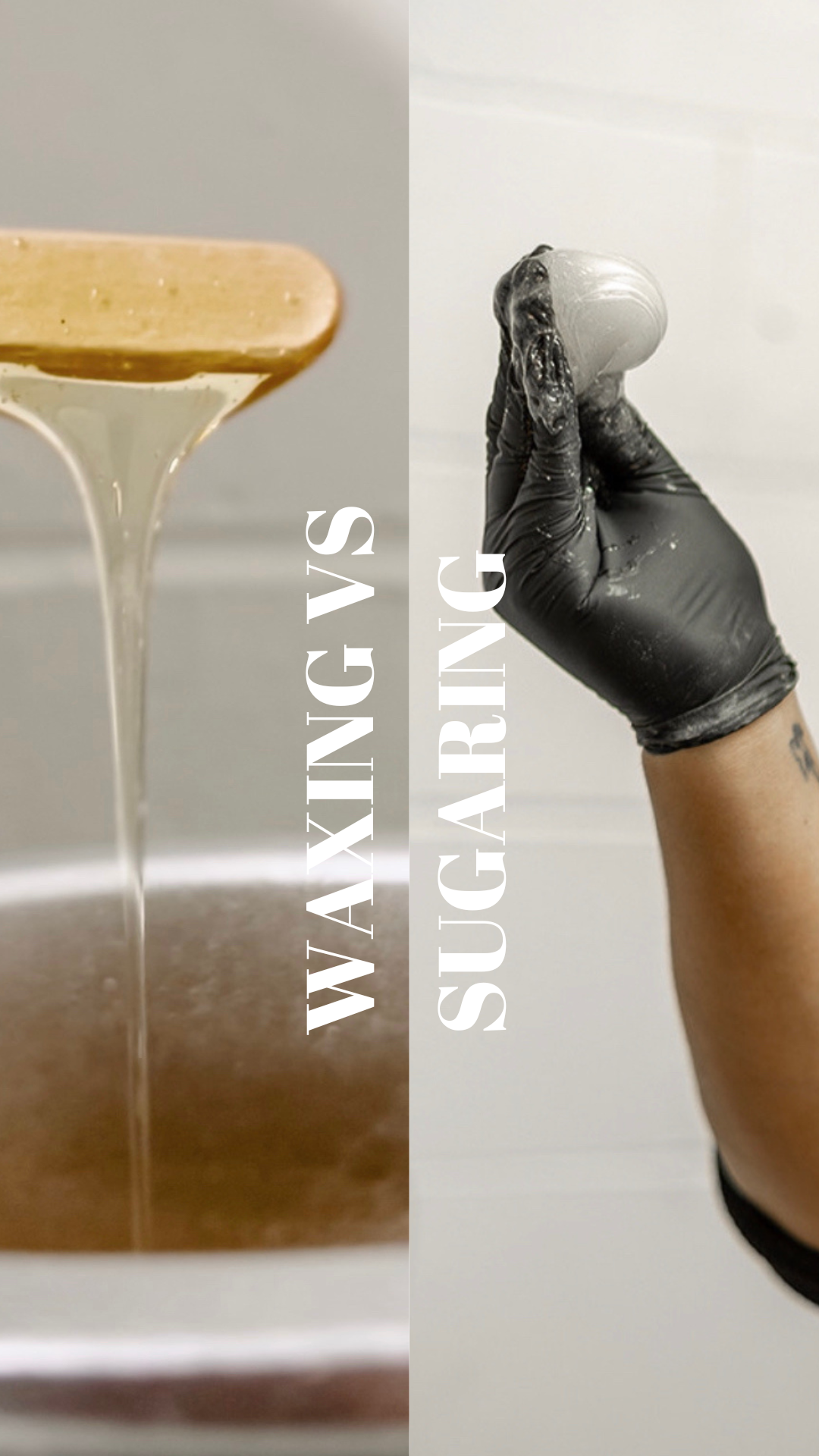
sugaring vs waxing | key differences
If you’re deciding between sugaring and waxing, you’re not alone it’s one of the most common questions we get at Remedy. Both are great for smooth, long-lasting hair removal, but they aren’t the same. Here’s a breakdown of the key differences so you know which one might be right for you.
1. Ingredients
Sugaring: Made from sugar, lemon, and water: all-natural, biodegradable, and gentle on the skin.
Waxing: Usually resin, or honey-based. Not always 100% natural, but still effective.
2. Application
Sugaring: Applied against the direction of hair growth, then removed with the direction.
Waxing: Applied with the direction of hair growth, removed against it.
3. Temperature
Sugaring: Room temperature or slightly warmed by hand.
Waxing: Heated in a pot before application.
4. Pain Level
Sugaring: Many clients find it gentler because it only sticks to the hair, not live skin cells.
Waxing: Grips both hair + skin, which can feel more intense.
5. Clean-Up
Sugaring: Water-soluble — wipes away with warm water, no residue.
Waxing: Needs oil or remover to clean leftover wax.
6. Regrowth Over Time
Sugaring: Can lead to finer, sparser hair with consistent treatments.
Waxing: Also thins hair over time
So, which is better? It depends on your skin type, pain tolerance, and personal preference. At Remedy, we offer both sugaring and waxing so you can choose what feels best for your body. The goal is always the same: smooth, glowing skin and a comfortable experience. ✨